
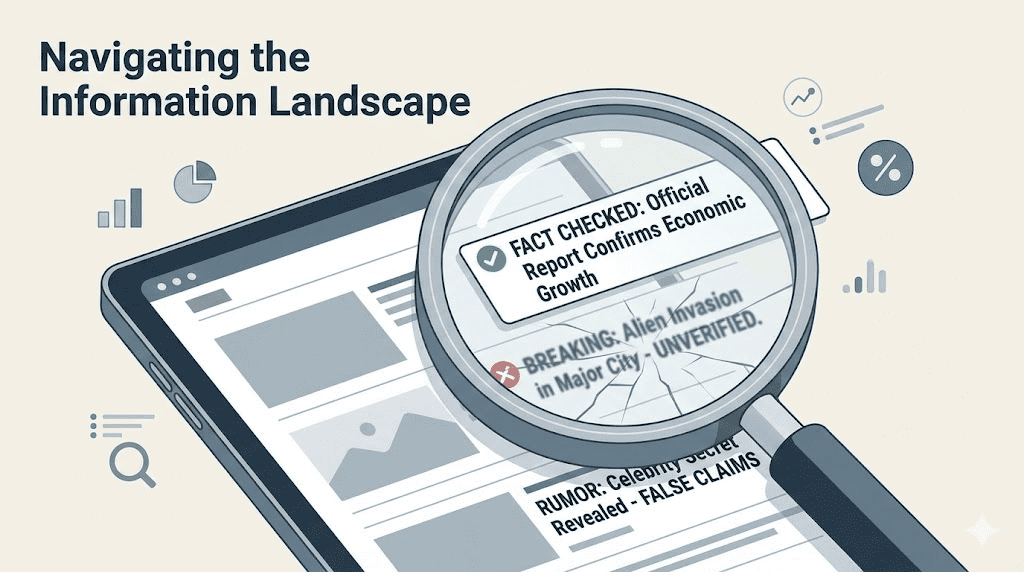
Fake News Detection Tips: How to Spot Misinformation Before It Misleads You
Fake News Detection Tips: How to Spot Misinformation Before It Misleads You MythBustingHub Your Guide to Digital Truth. Fake News Detection Tips: How to Spot Misinformation Before It Misleads You Published on October 27, 2025 | By MythBustingHub Team Fake news has become a daily part of the online world. From social media posts to forwarded messages and viral videos, misleading or completely false information spreads faster than ever before. The real danger is that fake news often looks believable, especially when it plays with emotions like fear, anger, or excitement. Learning how to use **fake news detection tips** is no longer optional. It is a basic digital skill. In this blog, we will explore practical, easy-to-apply tips that help you identify fake news before you believe it or share it. Why Fake News Is So Effective Fake news works because it is designed to feel urgent and emotional. It often confirms what people already believe or want to believe. Headlines are dramatic, language is extreme, and facts are presented without context. Understanding this psychology is the first step toward effective **fake news detection tips**. Tip 1: Check the Source Carefully 📰 The Tip “Always confirm the origin of the information. Is it professional or vague?” Reveal the Tip Actionable Step Fake news websites often mimic real news outlets but use slight spelling changes or unfamiliar domain names. Ask yourself: Is this a well-known, credible news organization? Does the website have an “About Us” section? If the source feels vague or unprofessional, that’s a red flag—a core **fake news detection tip**. Tip 2: Read Beyond the Headline 📝 The Tip “Don’t react to the title—read the entire story.” Reveal the Tip Actionable Step Fake news headlines are often written to shock or provoke emotion. Before reacting or sharing, read the full article. Many fake news stories fall apart once you go beyond the headline; sometimes the content does not even support the headline’s dramatic claim. Tip 3: Look for Evidence, Not Opinions 🔍 The Tip “Demand concrete proof, not vague claims or anonymous sources.” Reveal the Tip Actionable Step Real news is supported by evidence. Fake news relies heavily on opinions, anonymous sources, or vague claims. Ask: Are sources clearly named? Are studies, documents, or official statements linked? Can the information be verified elsewhere? If a story provides no solid evidence, it may be fake news or at least highly misleading. Tip 4: Cross-Check With Other Reliable Sources 🌐 The Tip “If it’s true and important, others will have reported it.” Reveal the Tip Actionable Step One of the strongest **fake news detection tips** is cross-verification. Take a few minutes to search for the exact same news on trusted platforms. If no other major, credible source mentions it, the information is likely fake news or grossly exaggerated. Tip 5: Check the Date and Context 📅 The Tip “Old news is often recycled to create new panic.” Reveal the Tip Actionable Step Sometimes old news is reshared as if it just happened. Always check the publication date. Also consider the context: a quote, image, or statistic taken out of context can completely change its meaning. Fake news often relies on this deceptive tactic. Tip 6: Be Careful With Images and Videos 📸 The Tip “Visual content can be edited or taken from unrelated events.” Reveal the Tip Actionable Step Visual content does not automatically mean truth. Use reverse image search (like Google Lens or TinEye) to check where the image originally appeared. Photos may be edited or taken from completely different events to create a false narrative. Tip 7: Question Emotional Reactions ❤️🩹 The Tip “If a post makes you extremely angry or scared, pause.” Reveal the Tip Actionable Step Fake news is designed to make you react emotionally rather than think logically. If a post triggers extreme anger, fear, or excitement, pause and ask yourself why this content wants such a strong reaction. Emotional manipulation is one of the most common **fake news** strategies. Tip 8: Think Before You Share 🗣️ The Tip “You are the last line of defense against misinformation.” Reveal the Tip Actionable Step Sharing fake news, even unintentionally, helps it spread. Before forwarding any information, especially on messaging apps, ask: Is this verified? Is this helpful or harmful? Am I absolutely sure this is true? Being cautious protects not just you, but everyone in your digital circle. Primary Motives Behind Fake News Conclusion Fake news will not disappear anytime soon. But its impact can be reduced if more people learn how to use these **fake news detection tips**. By checking sources, questioning headlines, verifying facts, and staying calm, anyone can become better at spotting fake news. The goal is not to distrust everything, but to trust information wisely. When we slow down and think critically, fake news loses its power.