
Author name: pallavbindal15@gmail.com

Uncategorized

10 Common Health Myths Even Smart People Believe

10 Common Health Myths You Still Believe (But Shouldn’t) MythBustingHub Scientific Facts. Zero Hype. 10 Common Health Myths Even Smart People Believe Published on October 16, 2025 It’s amazing how many “facts” we learn from our parents are actually total fiction. Today, we aren’t just telling you the truth—we are letting you discover it. Click through all 10 cards below to test your knowledge on these common health myths. 🦴 Myth #1: The Knuckle Cracker “Cracking your knuckles will give you arthritis.” Reveal Truth The Fact “False. That popping sound is just gas bubbles (nitrogen) bursting in the synovial fluid. One doctor cracked the knuckles on his left hand for 60 years and never got arthritis!” 💧 Myth #2: The 8-Glass Rule “You must drink 8 glasses of water a day to be healthy.” Reveal Truth The Fact “False. This ‘rule’ has no medical basis. You get about 20% of your water from food. Drink when you are thirsty—your body knows exactly when it needs hydration.” 🍭 Myth #3: Sugar Rush “Eating sugar makes children hyperactive.” Reveal Truth The Fact “False. Numerous double-blind studies show no direct link. The ‘sugar rush’ is usually due to the excitement of the environment (like birthday parties) where sweets are served.” 🪒 Myth #4: The Shaving Effect “Shaving hair causes it to grow back thicker and darker.” Reveal Truth The Fact “False. Shaving cuts the hair at the surface, creating a blunt tip. This makes it *feel* coarse as it grows out, but the thickness and color remain exactly the same.” 🧠 Myth #5: Brain Usage “Humans only use 10% of their brains.” Reveal Truth The Fact “False. Brain scans prove that virtually every part of the brain is active throughout the day. Evolution wouldn’t allow us to waste energy maintaining a 90% useless organ.” 🌧️ Myth #6: Wet Hair & Colds “Going outside with wet hair will make you catch a cold.” Reveal Truth The Fact “False. Colds are caused by viruses, not temperature. You get sick more often in winter because people stay indoors in close proximity, spreading germs more easily.” 🥕 Myth #7: Carrots & Night Vision “Eating carrots will allow you to see in the dark.” Reveal Truth The Fact “False. This was actually WWII propaganda! While Vitamin A is good for general eye health, eating excess carrots won’t give you night vision superpowers.” 🩸 Myth #8: Blue Blood “Deoxygenated blood inside your veins is blue.” Reveal Truth The Fact “False. Human blood is always red (bright red when oxygenated, dark red when not). Veins look blue because of how light scatters through your skin layers.” ❄️ Myth #9: Body Heat Loss “You lose most of your body heat through your head.” Reveal Truth The Fact “False. You lose heat from any exposed body part. The head isn’t special; it just happens to be the part we usually leave uncovered in winter!” 🔩 Myth #10: Rusty Nails “Rust causes Tetanus infections.” Reveal Truth The Fact “False. Tetanus is caused by a bacteria found in soil and dirt. A rusty nail is dangerous because it’s usually dirty, not because of the rust itself.” Which Myths Are Most Believed? Read Our Detailed Deep Dives: 🥛 The Milk & Mucus Myth Explained ☕ Side Effects of Tea: Fact vs Fiction

Uncategorized

How Long is The Great Wall of China? Real Facts & The “Space View” Myth Busted

How Long is The Great Wall of China? Real Facts & The “Space View” Myth Busted MythBustingHub Separating Fiction from Fact, One Myth at a Time. How Long is The Great Wall of China? Real Facts & The “Space View” Myth Busted Published on September 16, 2025 It is one of the greatest architectural feats in human history. But one question always tops the search results: how long is the Great Wall of China, and is it truly massive enough to be seen from the moon? While we often see a stunning picture of the great wall of china winding endlessly over mountains, the truth about its visibility and exact length is often misunderstood. Let’s start with the facts and then bust the biggest myth surrounding this wonder of the world. The Myth “The Great Wall of China is the only man-made object visible from space (or the moon) with the naked eye.” Reveal the Truth The Fact “Astronauts have confirmed that the Great Wall is generally *not* visible to the naked eye from space. While it is incredibly long, it is too narrow and blends in with the surrounding landscape.” Great Wall of China: Answering The Big Question of Length When people ask how long is the Great Wall of China, they are often unaware that the structure is not a single, continuous wall, but a vast network of walls, trenches, watchtowers, and fortresses constructed across various dynasties. Its true length is astounding, which is what makes this architectural project so monumental. According to the most recent, comprehensive survey, the total length of all its branches and sections combined is: Total Confirmed Length: A staggering 21,196 kilometers (13,171 miles). Main Ming Dynasty Line: The section most visitors see and recognize, which is relatively well-preserved, is about 8,851 km long. This section is often what people are referring to when they search for the “great wall of china how long.” To put the immense scale into perspective: the Great Wall stretches over mountains, deserts, and grasslands—a true testament to ancient engineering. The sheer distance that the wall covers helps us understand why the myth about seeing it from space became so popular; logically, something so long must be visible! It is important to know the true distance covered by the wall when evaluating its historical importance and the effort involved in its construction. Understanding **how long is the Great Wall of China** helps highlight the scale of the construction effort over centuries. Knowing this detailed information allows us to appreciate the true majesty far more than any simple great wall of china photos could convey. Why Can’t You See It From Space? Despite being 21,000 km long, why is the wall invisible to the naked eye from Low Earth Orbit? The problem isn’t the distance the wall covers; it’s the lack of contrast and its narrow width. The “Hair” Effect: The wall is generally only about 6 to 9 meters wide. Viewing it from space is visually comparable to trying to spot a single kilometer-long thread lying on a football field. It’s too narrow for the human eye to resolve clearly. Camouflage: Unlike bright city lights or the clear contrast of high-contrast highways, the Wall was built using local stone, brick, and earth. This means in any genuine **great wall of china photos** taken from high altitude, it blends almost perfectly with the brown and grey mountains and terrain around it. It has no distinctive color or shape when viewed from orbit. Astronaut Confirmation: Many astronauts, including China’s own Yang Liwei, have personally confirmed they could not see the structure with the unaided eye, further busting this popular myth. Visualizing the Scale: Great Wall vs. Earth Since the distance is hard to visualize, let’s use data to show the true **how long is the Great Wall of China** is in comparison to the Earth’s scale. The Scale of the Great Wall Conclusion: Separating Fact from Fiction The myth that the Wall is visible from space is highly compelling but definitively **BUSTED**. However, the reality of **how long is the Great Wall of China**—a staggering 21,196 km—is arguably more impressive than the myth itself. Its immense length, documented in authentic **great wall of china photos**, is a true testament to human engineering and perseverance. Focus on the real facts, not the fiction! [00:00:26] Enjoyed this breakdown? Watch the full video on the MythBustingHub YouTube Channel!

Uncategorized

Does Reading in Dim Light Damage Your Eyesight? 👀

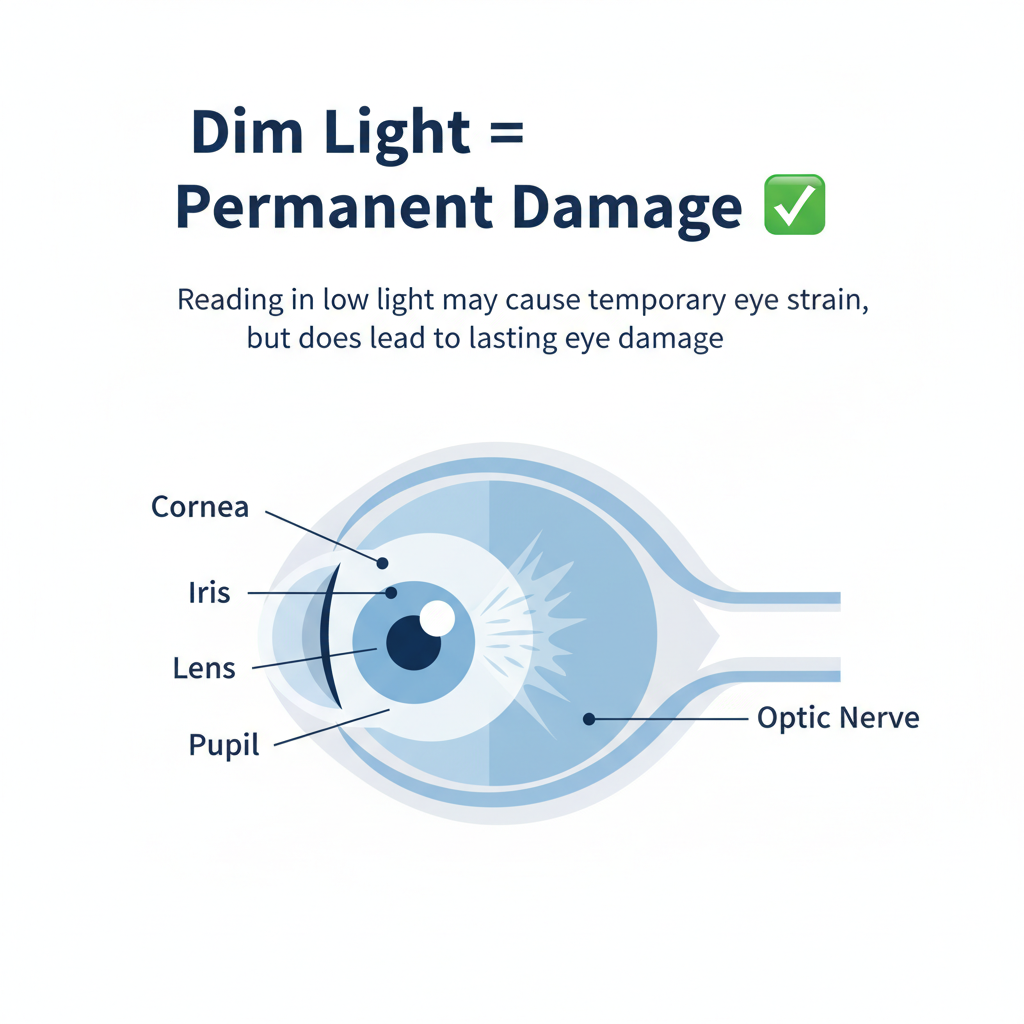
Does Reading in Dim Light Damage Eyes? A Doctor Weighs Myth vs. Fact MythBustingHub Separating Fiction from Fact, One Myth at aTime. Does Reading in Dim Light Damage Eyes? A Doctor Weighs Myth vs. Fact Published on September 28, 2025 It’s a warning passed down for generations: “Stop reading in that dim light, you’ll ruin your eyes!” But is this a hard medical fact, or a well-intentioned myth? We’re weighing the long-held beliefs against modern science to reveal the truth about permanent damage, short-term strain, and a surprising new discovery. The Myth “Reading in dim light will cause permanent eye damage and can lead to blindness.” Reveal the Truth The Fact “Reading in dim light does *not* cause permanent damage or blindness. However, it does cause very real *short-term* symptoms like eye strain, dry eyes, and headaches.” The “Myth”: No Long-Term Damage Let’s bust the biggest part of this myth first: reading in low light will not make you go blind. Your eyes are resilient. The idea that you are “using up” your eyesight or “wearing out” your eyes this way is not supported by science. The structure of your eye is not permanently harmed by the *act* of reading in dim light. The “Fact”: Short-Term Eye Strain is Real So why does everyone warn against it? Because the short-term effects are very real and uncomfortable. When you read in dim light, your eye muscles must work much harder to focus, and your pupils widen to let in more light. This causes: Digital Eye Strain: Your eyes feel tired, sore, or heavy. Dry Eyes: People tend to blink less when concentrating, leading to dryness and irritation. Headaches: The constant muscle tension from straining to see can easily trigger a tension headache. The “Nuance”: The New Scientific Link to Myopia This is where the myth gets complicated. While dim light itself doesn’t *damage* eyes, recent research has found a strong link between a *lack of bright, natural light* and the *progression* of myopia (nearsightedness) in children. So, a lifestyle that involves a lot of indoor time (often in lower light) and not enough time outdoors in bright, natural light *is* a risk factor for worsening eyesight. It’s not the dim light itself, but the *absence* of bright light that’s the problem. Compounding Risks: Phones and Reading Positions The problem gets worse when you combine dim light with modern habits: Reading on a Phone: Reading on a bright phone in a dark room is even harder on your eyes. The high contrast forces your pupils to struggle, increasing strain. Reading Lying Down: Reading lying down, especially on your side, can cause uneven focus and strain one eye more than the other, contributing to discomfort. Actionable Solutions: How to Read Comfortably You don’t need to damage your eyes, and you also don’t need to suffer from strain. The solutions are simple: Use Optimal Lighting: The best setup is a good, focused reading light that illuminates the page without causing glare. Follow the 20-20-20 Rule: Every 20 minutes, look at something 20 feet away for at least 20 seconds. This simple trick lets your eye muscles relax and helps prevent strain. Get Outdoors: Especially for kids, ensure plenty of time is spent outdoors in natural daylight to help combat the progression of myopia. Dim Light’s Real Effects on Eyes Conclusion So, while your parents were wrong about dim light causing blindness (Myth Busted!), they were right that it’s bad for you (Fact!). It causes real, temporary discomfort like eye strain and headaches. And the “Nuance” is that a lifestyle of *only* reading in low light (and not getting enough bright, natural light) is linked to the progression of myopia. The best solution? Just turn on a good light and remember to take breaks! Enjoyed this breakdown? Watch the full video on the MythBustingHub YouTube Channel!

Uncategorized

Do Cold Drinks Make Your Bones Weaker? 🥤 Myth Busted!

Cold Drinks and Bone Health: Do They Weaken Your Bones? Myth vs. Fact MythBustingHub Separating Fiction from Fact, One Myth at a Time. Cold Drinks and Bone Health: The Scientific Truth Behind the Myth Published on September 27, 2025 It’s a warning we’ve all heard: “Don’t drink that soda, it’s bad for your bones!” But do cold drinks weaken bones in the way we think? The fear is that fizzy drinks can somehow “leach” calcium or dissolve bone. This common cold drink bone weakness myth has persisted for decades, especially among teenagers and adults worried about osteoporosis. But what does the science actually say? Is it true that cold drinks damage bones, or is the reality more complex? The Myth “Drinking carbonated cold drinks will directly dissolve your bones or make them weaker.” Reveal the Truth The Fact “The act of carbonation itself doesn’t harm bones. However, ingredients in *some* cold drinks (like phosphoric acid in colas) and the high sugar content can *indirectly* harm bone health over time by affecting calcium absorption and overall nutrition.” Why Do People Think Cold Drinks Weaken Bones? This myth isn’t just a random story; it stems from a misunderstanding of what’s *in* fizzy drinks and how they work. Here’s the scientific explanation of the cold drink bone myth: The “Acid” Fear: Many people hear that soft drinks are “acidic.” They worry that this acid (like the acid in cold drinks) somehow travels through the body and dissolves bone. This is not how the body works. Your stomach is far more acidic, and your body has powerful systems (called buffers) to keep your blood’s pH level stable, regardless of what you eat or drink. The “Coke” Rumor: You may have seen videos of a tooth dissolving in coke. This takes weeks and doesn’t represent what happens in a human body. It’s a great example of a cold drink myth. The Real Effects of Cold Drinks on Bones So, if the acid doesn’t dissolve your bones, are cold drinks bad for bones at all? Yes, but the reasons are indirect and related to specific ingredients and habits. The daily cold drink side effects are real. Phosphoric Acid and Bone Health This is the most significant scientific link. Many dark-colored sodas (like colas) contain phosphoric acid for flavor. Your body needs a careful balance of calcium and phosphorus. Consuming too much phosphorus (from daily cold drinks) without enough calcium can disrupt this balance. To compensate, your body might pull calcium from your bones, which, over decades, could contribute to a higher soda and osteoporosis risk. The “Displacement Effect” & Cold Drinks Calcium Absorption This is the biggest problem, especially for teenagers. How cold drinks affect calcium levels is often a matter of replacement. When someone (a teen, for example) chooses to drink a large bottle of soda, they are *not* drinking a glass of milk, a calcium-fortified orange juice, or water. These sugary, fizzy drinks are “empty calories” that displace nutritious, bone-building beverages, leading to a cold drinks and calcium deficiency over time. Sugar and Bone Health High sugar intake from soft drinks and mineral absorption issues are linked. A diet high in sugar can lead to chronic inflammation and other metabolic problems, which can negatively impact the body’s ability to build and maintain strong bones. Real Reasons Soda Harms Bones (Conceptual) Conclusion: The Truth About Soft Drinks and Bone Health So, is it true that cold drinks damage bones? The myth that the carbonation or acid in a soda will *directly* weaken your bones is **BUSTED**. Simple carbonated water is fine. However, the *fact* is that a habit of drinking high-sugar, high-phosphoric-acid soft drinks and bone health do not mix. The risk isn’t a direct “melting” of bone, but an indirect, long-term harm caused by poor nutrition, calcium displacement, and mineral imbalances. An occasional cold drink is fine, but daily consumption is a real health risk. Myth Busted! Enjoyed this breakdown? Watch the full video on the MythBustingHub YouTube Channel!

Uncategorized

Side Effects of Milk: Does It Really Cause Mucus? (Myth Busted)

Side Effects of Milk: Does It Really Cause Mucus? (Myth Busted) MythBustingHub Separating Fiction from Fact, One Myth at a Time. Side Effects of Milk: Busting the Mucus Myth & Real Risks Published on October 15, 2025 For generations, we’ve been told that milk is a complete food, essential for strong bones. But recently, you might have heard a different story: that the side effects of milk include bloating, acne, or even worsening a cold. Is this true, or just another internet rumor? In this post, we reveal the scientific truth about the side effects of drinking milk daily. The Myth “Drinking milk when you have a cold creates more mucus and makes you sicker.” Reveal the Truth The Fact “Milk does NOT create mucus. It creates a temporary ‘sticky’ feeling due to its texture, but research from the Mayo Clinic proves it has no effect on actual phlegm production.” What Are the Real Side Effects of Milk? While milk is nutrient-dense, the disadvantages of drinking milk are real for certain people. It’s not about the cold, but about digestion: Digestive Issues: For those with lactose intolerance, milk can cause severe bloating, gas, and diarrhea. Acne Breakouts: Some studies suggest a link between dairy consumption and acne, likely due to hormones present in cow’s milk. Iron Absorption: Drinking excessive milk (more than 3 cups a day) can sometimes interfere with iron absorption, leading to anemia. Milk Side Effects on Cold & Cough (Myth vs Science) This is the most widespread belief: “Don’t drink milk if you have a cold.” Asking is milk bad during cold is a valid question. The Science: Milk is an emulsion (fat droplets in water). When mixed with saliva, it feels thick. This is a sensation, not biology. The milk and mucus myth has been debunked by doctors. You do not need to stop drinking milk unless it personally makes you uncomfortable. Side Effects of Milk at Night Is drinking milk before bed good or bad? There are potential side effects of milk at night to consider: The Good: It contains Tryptophan, which helps induce sleep. The Bad: If you have Acid Reflux (GERD), lying down after milk can cause heartburn. दूध पीने के नुकसान (Side Effects of Milk in Hindi) कई लोगों को लगता है कि दूध हमेशा फायदेमंद होता है, लेकिन कुछ स्थितियों में दूध पीने के नुकसान भी हो सकते हैं: पाचन की समस्या: अगर आपको लैक्टोज इनटॉलरेंस है, तो गैस और भारीपन हो सकता है। वजन बढ़ना: दूध में कैलोरी ज्यादा होती है, अत्यधिक सेवन से वजन बढ़ सकता है। मुंहासे (Acne): ज्यादा दूध पीने से चेहरे पर पिंपल्स निकल सकते हैं। Who Should Avoid Milk? According to the WHO and other health bodies, you should limit milk if: You are Lactose Intolerant. You suffer from severe Acne. You experience Acid Reflux at night. Scientific Validity of Milk Concerns Final Verdict: Truth Explained Myth Busted. The idea that milk causes mucus is false. The real side effects of milk are related to digestion and skin health for sensitive individuals. If you don’t have these issues, milk is a healthy addition to your diet. Internal Links for You: Side effects of tea Health myths Best foods during cold & cough Enjoyed this breakdown? Watch the full video on the MythBustingHub YouTube Channel!

Uncategorized

Goldfish Ki Memory Sirf 3 Second? 🐟🤯

MythBustingHub – Goldfish Memory Myth MythBustingHub Separating Fiction from Fact, One Myth at a Time. Goldfish Ki Memory Sirf 3 Second? 🐟🤯 | Myth vs Fact Published on September 14, 2025 Welcome to MythBustingHub, where we dive deep into popular beliefs to separate fact from fiction. Today, we’re tackling a classic: the idea that goldfish only have a 3-second memory. Is it true that these little aquatic friends forget everything every three seconds? Let’s find out! The Myth “Goldfish have a memory span of only 3 seconds.” Reveal the Truth The Fact “Truth is, goldfish have surprisingly strong memories! Scientists have proven they can remember things for months, including food times and their environment.” Breaking Down the Evidence ✔ Scientific Studies: Research has shown that goldfish can be trained to perform tasks and remember them for extended periods, far beyond a few seconds. [00:00:13] ✔ Food & Environment Recognition: Goldfish can recognize feeding schedules and learn to navigate complex mazes, demonstrating their ability to recall spatial information and routines. [00:00:16] ✔ Myth Origin: The 3-second memory myth is likely an exaggeration or a joke that became widely believed, rather than based on any scientific observation. [00:00:20] Memory Expectation vs. Reality: A Visual Comparison Conclusion It turns out the common belief about goldfish memory is just that – a myth! These little fish are much smarter than they’re given credit for, capable of remembering things for months. So next time someone mentions their 3-second memory, you’ll know the real fact! Myth Busted! [00:00:20] Enjoyed this breakdown? Watch the full video on the MythBustingHub YouTube Channel!

Uncategorized

“Do You Really Only Use 10% of Your Brain?

MythBustingHub – The Blog MythBustingHub Separating Fiction from Fact, One Myth at a Time. “Do You Really Only Use 10% of Your Brain?”] Published on October 26, 2023 Welcome to our deep dive into a very common belief. Many people think [briefly introduce the myth here]. It’s a fascinating idea that has been around for decades, appearing in movies and everyday conversations. But is there any scientific truth to it? Let’s investigate the evidence and uncover the reality behind the myth. The Myth “Humans only use 10% of their brain’s capacity.” Reveal the Truth The Fact “Neuroscience has shown that we use virtually all of our brain every day. Even during sleep, all parts of the brain show some level of activity. Different tasks just activate different regions more intensely.” Breaking Down the Evidence ✔ Brain Imaging: Scans like fMRI and PET show that large areas of the brain are active for even simple tasks. There are no dormant, unused 90% areas waiting to be unlocked. ✔ Evolutionary Cost: The brain uses about 20% of the body’s energy. From an evolutionary perspective, it would be highly inefficient to develop and maintain such a resource-intensive organ if 90% of it were useless. ✔ Brain Damage Studies: If 90% of the brain were unused, damage to those areas wouldn’t have significant effects. However, we know that even minor brain damage can have catastrophic consequences for our abilities. Myth vs. Reality: A Visual Comparison Conclusion So, the idea that we only use 10% of our brains is a compelling but ultimately baseless myth. Our brains are incredibly efficient and complex, with every part playing a crucial role. While we can always learn new things and form new connections, we are already using the full potential of this amazing organ every single day. Enjoyed this breakdown? Watch the full video on the MythBustingHub YouTube Channel!

Scroll to Top