
Author name: pallavbindal15@gmail.com

Uncategorized

Does Shampoo Cause Hair Fall? Understanding the Truth Behind This Common Myth

Does Shampoo Cause Hair Fall? Understanding the Truth Behind This Common Myth MythBustingHub Where Science Meets Clarity. Does Shampoo Cause Hair Fall? Understanding the Truth Behind This Common Myth Published on October 28, 2025 | By MythBustingHub Team Hair fall worries many people, especially when they start noticing strands on their pillow, comb, or bathroom floor. One belief that often causes confusion is the idea that **shampoo is responsible for excessive hair loss**. Because washing hair is when shedding becomes visible, it is easy to assume that shampoo is the root cause. But is that really true, or is this just a misunderstood myth? Let’s look at the facts in a simple and realistic way and answer: **Does shampoo cause hair fall**? 1. Why Shampoo Often Gets Blamed 🚿 The Observation “I only notice major hair loss when I wash it—so the shampoo must be the problem.” Reveal the Truth Reality: It Only Reveals Shedding This visual impact makes the problem feel sudden and serious. However, shampoo does not create the problem. It only makes existing shedding more noticeable. Human hair follows a natural cycle of growth, rest, and shedding. Losing 50-100 strands daily is completely normal. Washing simply helps remove hair that has already completed its life cycle and is ready to fall out. 2. Can Shampoo Ever Make Hair Loss Worse? 🧪 The Claim “Using chemical-filled shampoo causes permanent root damage.” Reveal the Truth Reality: Breakage, Not Root Loss **Shampoo itself does not directly cause hair fall**, but certain habits linked to washing can contribute indirectly. Using very harsh shampoos (especially high-sulfate ones), washing too aggressively, or scrubbing the scalp roughly can weaken hair strands, leading to **breakage**. These factors affect the hair *shaft* and not the *root*, but they may make hair appear thinner over time. Choosing a mild shampoo and washing gently can prevent unnecessary stress on the hair. Understanding Natural Hair Shedding Every strand on your head grows for a few years, rests for a short period, and then falls out to make room for new growth. This process happens continuously, whether you wash your hair or not. If someone delays washing for several days, shed hair remains trapped on the scalp. When washing finally happens, multiple strands are released at once. This sudden shedding often leads people to believe **shampoo is causing hair fall**, when it is actually just revealing a normal biological process. Other Common Causes People Overlook Many people blame shampoo when the real cause lies elsewhere. These factors affect the hair follicles directly and are the true reason for increased hair fall: **Genetics:** Androgenetic alopecia (pattern baldness) is the most common cause. **Hormonal Changes:** Postpartum shedding, thyroid issues, or PCOS. **Stress:** Significant emotional or physical stress (Telogen Effluvium). **Poor Nutrition:** Deficiency in iron, protein, or B vitamins. **Medical Conditions:** Autoimmune diseases or chronic illnesses. Does Stopping Shampoo Help? Some people stop washing their hair entirely, hoping it will reduce shedding. In most cases, this does not help. A dirty scalp can lead to buildup, itching, and inflammation (like Seborrheic Dermatitis), which may actually worsen hair health. A clean scalp supports healthier hair growth. The key is balance, not avoidance. True Drivers of Hair Fall vs. Shampoo How to Wash Hair the Right Way To minimize unnecessary breakage and reduce the appearance of shedding during washing, follow these simple **fake news detection tips** for your routine: Use a gentle, sulfate-free shampoo. Massage the scalp softly instead of scrubbing aggressively. Avoid very hot water, which strips natural oils. Do not rub wet hair vigorously with a towel; gently blot it dry. Detangle gently with a wide-tooth comb after washing. Conclusion **Shampoo does not cause hair fall**, but misunderstandings around washing make it an easy target. Shedding during a wash is usually a normal part of the hair growth cycle. While harsh products and rough handling can damage hair, gentle washing supports scalp health rather than harming it. Understanding the real causes helps reduce fear and allows for better hair care decisions. Instead of avoiding shampoo, focusing on healthy habits, nutrition, and stress management makes a bigger difference in the long run.


Uncategorized

Indian History Place Guide: Exploring the Stories Written in Stone

Indian History Place Guide: Exploring the Stories Written in Stone MythBustingHub Exploring History, Debunking Assumptions. Indian History Place Guide: Exploring the Stories Written in Stone Published on October 27, 2025 | By MythBustingHub Team An **indian history place** is more than just an old monument or a tourist destination. It is a living chapter of the past, quietly telling stories of civilizations, empires, struggles, creativity, and ideas that shaped India over thousands of years. From ancient ruins to majestic forts and timeless temples, every **indian history place** holds memories that connect the present to a deep and complex past. India’s history is not written in one book. It is written across landscapes, cities, and monuments. Visiting or learning about an **indian history place** helps us understand how India evolved culturally, politically, and socially. Why Indian History Place Sites Are So Important Every **indian history place** represents a specific moment in time. Some reflect ancient scientific knowledge, some show architectural brilliance, and others stand as reminders of battles, sacrifices, and cultural exchanges. These places help us: Understand how people lived in different eras. Learn about ancient governance, religion, and trade. See how art and architecture evolved. Preserve national identity and heritage. Without protecting and studying **indian history place** locations, large parts of history would be reduced to textbook summaries instead of real, tangible experiences. Explore Indian History Place Sites by Era 🏛️ Ancient Indian History Place Sites Click to reveal sites from the Indus Valley & Ashokan Empire. Show Sites The Roots of Civilization The ruins of Mohenjo-daro and Harappa represent the Indus Valley Civilization, known for advanced urban planning and drainage systems. These sites show that **ancient India** had organized cities long before many other civilizations. Another important **indian history place** is Sanchi Stupa, which reflects the spread of Buddhism under Emperor Ashoka. Its carvings and structures communicate ideas of peace and morality without words. 🏰 Medieval Indian History Place Monuments and Forts Click to reveal sites from the Mughal and Rajput eras. Show Sites Forts, Palaces, and Cultural Fusion The medieval period gave India some of its most iconic **indian history place** monuments. The Red Fort in Delhi is not just a Mughal architectural masterpiece but also a symbol of India’s independence. Qutub Minar reflects early Indo-Islamic architecture. In Rajasthan, forts like Mehrangarh, Amer Fort, and Chittorgarh Fort bring history alive through their walls, corridors, and legends. 🙏 Religious Indian History Place Sites Click to reveal sites showcasing engineering and spiritual coexistence. Show Sites Artistry, Devotion, and Engineering Temples like Brihadeeswarar Temple, Konark Sun Temple, and Khajuraho showcase not only devotion but also extraordinary engineering and artistic skill. These structures were built without modern tools, yet they have survived centuries. Similarly, places like Bodh Gaya, Ajmer Sharif, and Golden Temple are **indian history place** sites that represent spiritual coexistence and shared cultural values. 🇬🇧 Colonial-Era Indian History Place Landmarks Click to reveal sites from the British Raj and Independence era. Show Sites Resistance and Reform India’s colonial past is also reflected in many **indian history place** landmarks. Buildings like Victoria Memorial, Gateway of India, and old railway stations remind us of British rule and the freedom struggle that followed. These sites are important because they tell stories of resistance, reform movements, and the eventual journey toward independence, helping us understand modern India’s political foundation. Why Preserving Indian History Place Heritage Matters Conclusion An **indian history place** is a bridge between the past and the present. These sites remind us where we come from, how societies evolve, and why cultural memory matters. Whether it is an ancient ruin, a medieval fort, a sacred temple, or a colonial monument, each **indian history place** contributes a vital chapter to India’s long and complex story. Exploring and respecting these places is not just about history. It is about understanding identity, continuity, and responsibility.

Uncategorized

Fake News Detection Tips: How to Spot Misinformation Before It Misleads You

Fake News Detection Tips: How to Spot Misinformation Before It Misleads You MythBustingHub Your Guide to Digital Truth. Fake News Detection Tips: How to Spot Misinformation Before It Misleads You Published on October 27, 2025 | By MythBustingHub Team Fake news has become a daily part of the online world. From social media posts to forwarded messages and viral videos, misleading or completely false information spreads faster than ever before. The real danger is that fake news often looks believable, especially when it plays with emotions like fear, anger, or excitement. Learning how to use **fake news detection tips** is no longer optional. It is a basic digital skill. In this blog, we will explore practical, easy-to-apply tips that help you identify fake news before you believe it or share it. Why Fake News Is So Effective Fake news works because it is designed to feel urgent and emotional. It often confirms what people already believe or want to believe. Headlines are dramatic, language is extreme, and facts are presented without context. Understanding this psychology is the first step toward effective **fake news detection tips**. Tip 1: Check the Source Carefully 📰 The Tip “Always confirm the origin of the information. Is it professional or vague?” Reveal the Tip Actionable Step Fake news websites often mimic real news outlets but use slight spelling changes or unfamiliar domain names. Ask yourself: Is this a well-known, credible news organization? Does the website have an “About Us” section? If the source feels vague or unprofessional, that’s a red flag—a core **fake news detection tip**. Tip 2: Read Beyond the Headline 📝 The Tip “Don’t react to the title—read the entire story.” Reveal the Tip Actionable Step Fake news headlines are often written to shock or provoke emotion. Before reacting or sharing, read the full article. Many fake news stories fall apart once you go beyond the headline; sometimes the content does not even support the headline’s dramatic claim. Tip 3: Look for Evidence, Not Opinions 🔍 The Tip “Demand concrete proof, not vague claims or anonymous sources.” Reveal the Tip Actionable Step Real news is supported by evidence. Fake news relies heavily on opinions, anonymous sources, or vague claims. Ask: Are sources clearly named? Are studies, documents, or official statements linked? Can the information be verified elsewhere? If a story provides no solid evidence, it may be fake news or at least highly misleading. Tip 4: Cross-Check With Other Reliable Sources 🌐 The Tip “If it’s true and important, others will have reported it.” Reveal the Tip Actionable Step One of the strongest **fake news detection tips** is cross-verification. Take a few minutes to search for the exact same news on trusted platforms. If no other major, credible source mentions it, the information is likely fake news or grossly exaggerated. Tip 5: Check the Date and Context 📅 The Tip “Old news is often recycled to create new panic.” Reveal the Tip Actionable Step Sometimes old news is reshared as if it just happened. Always check the publication date. Also consider the context: a quote, image, or statistic taken out of context can completely change its meaning. Fake news often relies on this deceptive tactic. Tip 6: Be Careful With Images and Videos 📸 The Tip “Visual content can be edited or taken from unrelated events.” Reveal the Tip Actionable Step Visual content does not automatically mean truth. Use reverse image search (like Google Lens or TinEye) to check where the image originally appeared. Photos may be edited or taken from completely different events to create a false narrative. Tip 7: Question Emotional Reactions ❤️‍🩹 The Tip “If a post makes you extremely angry or scared, pause.” Reveal the Tip Actionable Step Fake news is designed to make you react emotionally rather than think logically. If a post triggers extreme anger, fear, or excitement, pause and ask yourself why this content wants such a strong reaction. Emotional manipulation is one of the most common **fake news** strategies. Tip 8: Think Before You Share 🗣️ The Tip “You are the last line of defense against misinformation.” Reveal the Tip Actionable Step Sharing fake news, even unintentionally, helps it spread. Before forwarding any information, especially on messaging apps, ask: Is this verified? Is this helpful or harmful? Am I absolutely sure this is true? Being cautious protects not just you, but everyone in your digital circle. Primary Motives Behind Fake News Conclusion Fake news will not disappear anytime soon. But its impact can be reduced if more people learn how to use these **fake news detection tips**. By checking sources, questioning headlines, verifying facts, and staying calm, anyone can become better at spotting fake news. The goal is not to distrust everything, but to trust information wisely. When we slow down and think critically, fake news loses its power.

Uncategorized

Evolution Is Just a Theory Myth: Understanding What Science Really Means

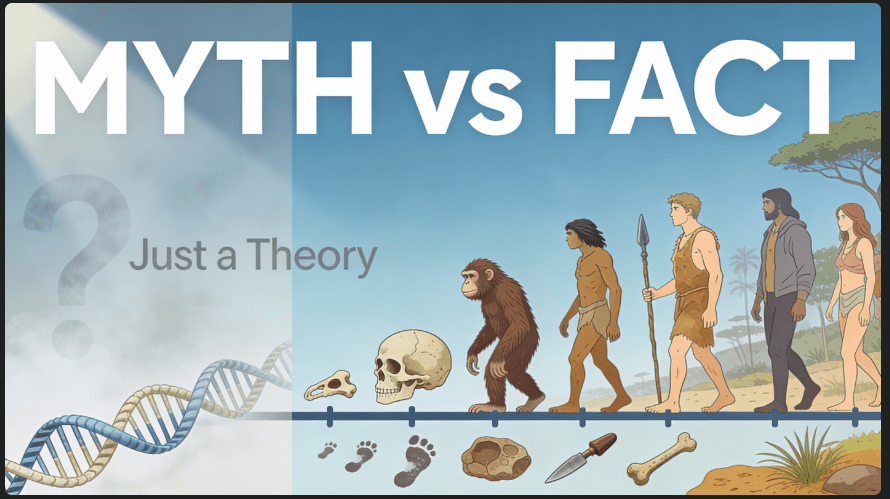
Evolution Is Just a Theory Myth: Understanding What Science Really Means? MythBustingHub Where Science Meets Clarity. Evolution Is Just a Theory Myth: Understanding What Science Really Means Published on October 27, 2025 | By MythBustingHub Team The **evolution is just a theory myth** is a phrase that often appears in debates about science, education, and belief. It sounds simple, even logical, but it is built on a misunderstanding of how science uses the word *theory*. When people hear this claim, they usually assume that evolution is uncertain or unproven. That assumption, however, is where the confusion begins. This article explains where this myth comes from, why it persists, and what science actually means when it talks about evolution. Understanding the Word “Theory” Why People Say “Evolution Is Just a Theory” In everyday conversation, the word *theory* usually means a guess or a personal idea. Because of this everyday usage, many people misunderstand scientific language. This misunderstanding is the foundation of the **evolution is just a theory myth**. People apply a casual definition of the word to a scientific context, where it has a very different meaning. What a Scientific Theory Really Is In science, a theory is not a guess. It is a well-tested explanation that is supported by evidence from multiple fields and repeated observations. Well-known scientific theories include: **Germ Theory of Disease:** Explains *how* diseases spread. **Theory of Gravity:** Explains *how* mass attracts other mass. Each of these theories explains *how* something works, not whether it exists. In the same way, evolutionary theory explains *how* life changes over time. 1. Claim: Evolution Lacks Sufficient Evidence 🧬 The Claim “The concept is just based on a few incomplete fossil records.” Reveal Evidence Reality: Evidence from Multiple Fields One reason the **evolution is just a theory myth** fails is the sheer amount of evidence supporting it, which does not come from one source but from many independent areas of science: **Fossils:** Show gradual changes in species over long periods. **Genetics:** Shows direct ancestral links and similarities between different forms of life (like humans and primates). **Direct Observation:** Small evolutionary changes (like antibiotic resistance in bacteria) are observed in organisms today. **Anatomy:** Vestigial organs and homologous structures link species through common ancestry. 2. Claim: It Must Be Either a Fact or a Theory 🧐 The Claim “If evolution were real, it would be called a law or a fact, not a theory.” Reveal Evidence Reality: Evolution is Both Evolution is a **fact** in the sense that populations change over generations (this is observable). Evolution is also a **theory** because it is the overwhelmingly supported explanation of the *mechanisms* behind those changes (natural selection, genetic variation). Being a theory is the highest status an explanation can achieve in science. Why This Myth Continues to Spread Despite strong evidence, the **evolution is just a theory myth** continues for several reasons. Scientific terms are rarely explained clearly outside classrooms. Social media favors simple, dramatic statements over careful explanations. Cultural or ideological disagreements with evolution can also make people more willing to accept misleading claims. Once a phrase is repeated often enough, it begins to feel true, even when it is not. Does Accepting Evolution Conflict With Belief? Another reason this myth persists is the belief that accepting evolution forces people to abandon personal or religious beliefs. This is not necessarily true. Evolution describes biological processes. It does not make claims about purpose, meaning, or morality. Science answers questions about *how* the natural world works, not *why* life exists. Conclusion: The Importance of Scientific Literacy The idea that evolution is “just a theory” comes from a misunderstanding of scientific language, not from a lack of evidence. Evolution is one of the most strongly supported explanations in modern science, backed by research across multiple disciplines. Recognizing why the **evolution is just a theory myth** exists allows us to move beyond slogans and toward informed understanding. When we apply critical thinking, discussions about science become less about confusion and more about curiosity.

Uncategorized

Moon Landing Fake Myth: Why the Claim Exists and Why It’s Wrong

Moon Landing Fake Myth: Why the Claim Exists and Why It’s Wrong MythBustingHub Where History Meets Evidence. Moon Landing Fake Myth: Why the Claim Exists and Why It’s Wrong Published on October 27, 2025 | By MythBustingHub Team The **moon landing fake myth** is one of the most popular conspiracy theories in modern history. Even decades after humans first walked on the Moon, many people still believe that the entire Apollo mission was staged in a studio. Social media videos, edited photos, and half-truths have kept this **moon landing fake myth** alive across generations. But where did this myth come from, and does it stand up to scientific scrutiny? Let’s examine the claim calmly, logically, and with evidence. Why the Moon Landing Fake Myth Became Popular The moon landing happened in 1969, during the intense Cold War era. When NASA announced that humans had landed on the Moon, it shocked the world. For some people, the achievement felt “too big to be real.” This emotional disbelief became the foundation of the **moon landing fake myth**. Over time, distrust in governments, combined with misinformation, helped the myth spread further. 1. Claim: The Landing Was Filmed in a Studio 🎬 The Argument “NASA filmed the entire event on Earth using advanced Hollywood movie sets.” Reveal Evidence Reality: Technology Wasn’t Advanced Enough This claim ignores a simple fact: in 1969, special effects technology was far less advanced than today. Creating a fake Moon environment convincing enough to fool scientists worldwide would have been harder, and arguably more expensive, than actually going to the Moon. Furthermore, thousands of engineers, scientists, and international observers were involved. Keeping such a massive secret hidden for over 50 years is practically impossible. 2. Claim: The Flag Appears to Wave 🇺🇸 The Argument “The American flag appears to ripple in the footage, proving there was wind from a studio fan.” Reveal Evidence Reality: Physics, Not Wind The flag was designed with a horizontal rod (a telescoping pole) along the top edge to keep it extended, preventing it from hanging limp in the airless vacuum. When astronauts planted it, the movement caused vibrations that continued briefly due to the Moon’s low gravity and lack of air resistance. This behavior is consistent with basic physics, not evidence of a studio fan. 3. Claim: There Are No Stars in the Moon Photos ⭐ The Argument “If they were really in space, the photos would be full of stars.” Reveal Evidence Reality: Camera Exposure Settings This is easily explained by camera exposure settings. The Moon’s surface and the white spacesuit of the astronaut were brightly lit by the Sun (pure daylight). The cameras were adjusted for that extreme brightness. Stars, which are much dimmer, do not appear under those settings. Professional photographers confirm this effect even when shooting bright foregrounds on Earth at night. Scientific Evidence That Debunks the Moon Landing Fake Myth The strongest refutation of the **moon landing fake myth** comes from verifiable, independent science, not just NASA’s statements. The global evidence is overwhelming: Independent Proof of the Apollo Missions Moon Rocks: 382 kg of Moon rocks were brought back, studied by thousands of independent scientists worldwide, and found to have properties distinct from Earth rocks. Retroreflectors: Reflective arrays were placed on the Moon by Apollo missions. They are still used today by observatories to measure the Earth–Moon distance with lasers. International Confirmation: Independent space agencies from Russia, China, and India (through their own lunar satellites) have confirmed the Apollo landing sites. Modern Photos: Modern satellites, like NASA’s Lunar Reconnaissance Orbiter, have photographed the original landing locations, clearly showing the tracks, the descent stages of the lunar modules, and the equipment left behind. Why the Moon Landing Fake Myth Still Persists The **moon landing fake myth** survives because humans are naturally drawn to dramatic explanations. Conspiracy theories offer a sense of secret knowledge and emotional excitement. Algorithms on social media amplify shocking claims faster than boring facts. Also, the rise of mistrust in institutions makes people more willing to believe that governments lie, even when the evidence is overwhelming. Conclusion: The Truth About the Moon Landing The **moon landing fake myth** is not supported by scientific evidence, historical records, or independent verification. The Apollo missions remain one of humanity’s greatest achievements, built on physics, engineering, and global observation. Questioning history is healthy; ignoring evidence is not. Understanding why the **moon landing fake myth** exists helps us become better thinkers and better consumers of information. The real story of the Moon landing is far more inspiring than any conspiracy theory. Enjoyed this breakdown?

vastu shastra
Uncategorized

Vastu Shastra Myths: What People Get Wrong About Vastu Shastra

Vastu Shastra Myths: Truth vs Reality Explained | MythBusting Hub MythBustingHub Tradition Analyzed Through Science and Logic. Vastu Shastra Myths: Truth vs Reality Explained Published on January 2, 2026 | By MythBustingHub Research Team Vastu Shastra is one of the most talked-about traditional systems in India. Some follow it with deep faith, others fear it, and many reject it entirely because of the myths surrounding it. Over time, exaggerated claims and misinformation have transformed Vastu Shastra from a practical design philosophy into something that feels rigid and frightening. In this blog, we break down the most common claims about Vastu Shastra and explain what it actually teaches — without superstition, fear, or exaggeration. 🔥 Trending Hook “This claim is everywhere on Instagram…” “Your house is blocking your success.” “This direction is the reason for your financial problems.” “Vastu decides your destiny.” Such statements frequently appear in reels, real-estate ads, and WhatsApp forwards. They create anxiety and make people believe that their homes are either lucky or unlucky by default. But are these claims true — or are they myths amplified by fear? ❌ The Claim (Myth) 🏠 The Myth “Vastu Shastra guarantees wealth, success, and good luck — and a house that doesn’t follow it brings bad outcomes.” Reveal the Reality Reality: Support, Not Determinism According to this belief, a single Vastu flaw can ruin health or finances. This claim turns Vastu Shastra into a system of fear and promises. In reality, Vastu is about creating an environment that supports well-being, not one that magically determines your fate. 🧠 Why People Believe It There are several psychological and social reasons why these myths feel convincing: Desire for Control: Vastu offers a simple explanation for complex life outcomes. Fear-Based Marketing: Exaggerated claims create urgency and dependence on consultants. Cultural Authority: Because it is ancient, people assume every rule must be absolute. Confirmation Bias: People credit Vastu for success but ignore it during failures. Modern Environmental Design vs. Vastu Myths Comparison of factors influencing household well-being. 🔬 What Science Actually Says From a scientific and architectural perspective, Vastu Shastra is not a system of luck. At its core, Vastu Shastra focuses on **natural light, airflow, ventilation, climate adaptation, and spatial balance.** These principles are also found in modern environmental psychology. A well-lit, well-ventilated space can reduce stress and increase productivity. However, science clearly shows that environment supports behavior — it does **not** determine fate. No scientific study proves that house direction alone can cause wealth or failure. 🏠 Common Vastu Shastra Myths Explained ❌ Myth: A Non-Vastu Home Is Bad Luck “Modern homes are unlucky if they aren’t 100% compliant.” Reveal Reality Most modern homes are not fully Vastu-compliant due to urban layouts. This does not make them unlucky. Minor adjustments often restore balance without major changes. ❌ Myth: Only North-Facing Homes Are Good “Any other direction is inferior or dangerous.” Reveal Reality Vastu Shastra never claims one direction suits everyone. Layout, ventilation, and overall design matter significantly more than the facing direction alone. ❌ Myth: Vastu Shastra Is Religious “You must perform rituals for Vastu to work.” Reveal Reality While ancient texts use symbolic language, Vastu principles are based on environmental observation and architecture — not rituals or worship. ❌ Myth: Vastu Corrections Require Breaking Walls “You must demolish parts of your house to fix energy.” Reveal Reality Modern Vastu adjustments usually involve furniture placement, lighting, colors, and room usage — not demolition. 📊 Evidence & References What experts and institutions suggest: Environmental Psychology: Confirms space design affects mood, not destiny. WHO Housing Guidelines: Emphasize ventilation and light for mental and physical well-being. Scientific Studies: Show no causal link between direction and financial success. ⚖️ Final Verdict Verdict: MYTH ❌ Vastu Shastra does not guarantee success or wealth ❌ A non-Vastu home is not unlucky ✔ Vastu supports comfort, balance, and well-being ✔ It works best as guidance, not control Frequently Asked Questions Does Vastu Shastra guarantee wealth and success? No. Vastu Shastra does not guarantee wealth or success. It focuses on environmental balance, light, airflow, and spatial comfort, which may support well-being but do not replace effort or decision-making. Is a house without Vastu Shastra rules bad luck? No. Most modern homes are not fully Vastu-compliant due to urban design. This does not make them unlucky. Minor adjustments can improve balance without major changes. Is Vastu Shastra a religious practice? Vastu Shastra is not a religious requirement. It is based on natural elements such as sunlight, airflow, climate, and spatial psychology rather than rituals or worship. Are only north-facing homes good? No. Vastu Shastra does not claim that north-facing homes are best for everyone. Layout, ventilation, light, and balance matter more than direction alone. ⭐ Conclusion Vastu Shastra was never meant to create fear. It was designed to help people live comfortably in harmony with their surroundings. Understanding the truth allows us to use Vastu Shastra wisely — without anxiety, superstition, or unrealistic expectations. A good space supports life, but you still shape your own future. 📚 Trusted References Environmental Psychology Research on Built Environments WHO Housing & Health Guidelines Modern Architectural Design & Vastu Comparisons Urban Planning & Climate Design Literature

Uncategorized

Busting Scientific Myths About Ancient India: What Is True?

Busting Scientific Myths About Ancient India: Fact vs Fiction MythBustingHub Where History Meets Evidence. Busting Scientific Myths About Ancient India: What Is True? Published on October 24, 2025 | By MythBustingHub Team The world has always looked at ancient India with curiosity. Its philosophy, mathematics, astronomy, medicine, and spiritual sciences continue to attract global attention. But with admiration comes exaggeration, and with tradition comes misunderstanding. Over the years, several scientific myths have grown around ancient India. Some myths glorify the past far beyond evidence, while others dismiss genuine achievements as mere folklore. This article clears the fog by separating fact from fiction, revealing what ancient India truly contributed to science. 1. Did Ancient India Invent Modern Technology? ✈️ The Myth “Ancient India invented airplanes and nuclear weapons thousands of years ago.” Reveal Reality Reality: Advanced Civilization, But Not Modern Tech Texts like the Vaimanika Shastra are often cited as proof of ancient aircraft. However, scholars consider this text to be a much later composition (early 20th century) with no credible evidence of operational flying machines in ancient India. Dismissing real achievements in favor of fantasy prevents us from appreciating what ancient India actually accomplished. The truth—like advanced town planning and metallurgy—is remarkable without needing embellishment. 2. Is Science Hidden in Vedic Scriptures? 📜 The Myth “All modern scientific discoveries were already written in Vedic scriptures.” Reveal Reality Reality: Philosophy and Inquiry Vedic texts primarily deal with philosophy, rituals, cosmology, and spiritual principles. They include symbolic descriptions of the universe, but interpreting them as literal scientific formulas (like $E=mc^2$) is inaccurate. What makes ancient India special is the spirit of inquiry these texts encouraged. They inspired generations of scholars (like Aryabhata) who later created real mathematical advancements. 3. Was Ancient Surgery Equal to Modern Medicine? 🩺 The Myth “Ancient India achieved the exact same level of medicine as modern hospitals.” Reveal Reality Reality: The Father of Surgery Ayurveda is a monumental contribution. Sushruta is rightfully called the “Father of Surgery” for describing rhinoplasty (plastic surgery), cataract removal, and bone setting centuries before the West. However, claiming they possessed modern microscopic precision or 21st-century technology is a myth. What they achieved was extraordinary for that era and laid the foundations for future medicine. 4. Was Ancient Astronomy Primitive? 🔭 The Myth “Ancient Indian astronomy lacked sophistication.” Reveal Reality Reality: Groundbreaking Models This is far from the truth. Scholars like Aryabhata suggested Earth’s rotation long before many other civilizations. They developed complex astronomical models to predict eclipses. However, modern claims that they calculated the exact speed of light to the decimal or knew quantum physics are often exaggerations based on misinterpreting metaphorical verses. 5. Were There No Achievements Before the Greeks? 🏛️ The Myth “Ancient India had zero scientific achievements before Greek influence.” Reveal Reality Reality: Independent Pioneers This Western narrative is completely inaccurate. Ancient India independently developed: The Decimal Number System & Concept of Zero Early Algebra and Trigonometry Rust-resistant Iron (Metallurgy) Urban Planning (Indus Valley) India was not a passive receiver of science; it was a pioneer that shaped global knowledge. Global Impact of Ancient Indian Science Why These Myths Matter Myths, whether glorifying or dismissive, distort history. If we exaggerate achievements, we turn real knowledge into fantasy. If we deny genuine contributions, we erase the legacy of one of the world’s most influential civilizations. Conclusion The scientific achievements of ancient India are impressive, but they must be understood with evidence, not emotion. When we remove false claims, a powerful truth remains: Ancient India built foundations that changed global knowledge. From mathematics to medicine, its contributions shaped human progress.

Uncategorized

Busting Myths About Indian Culture: Understanding True Heritage

Busting Myths About Indian Culture: The True Heritage Explained MythBustingHub Where Tradition Meets Truth. Busting Myths About Indian Culture: Understanding True Heritage Published on October 22, 2025 | By MythBustingHub Team Indian culture often stands surrounded by myths, misunderstandings, and half-painted assumptions. Many people see India through fragments: a ritual here, a festival there, or a stereotype somewhere in between. But the real Indian culture heritage is far richer, deeper, and more vibrant than these surface impressions. This article unpacks the most common myths and reveals the true spirit of India’s cultural legacy—a living entity that evolves while honoring its roots. 1. Is Indian Culture Stuck in the Past? 🕰️ The Myth “Indian culture is old and stagnant, surviving only on ancient glory.” Reveal Reality Reality: A Continuous Evolution Indian culture heritage evolves continuously. Traditional arts blend with modern forms, classical music embraces global audiences, and ancient wisdom (like Yoga and Ayurveda) flows into contemporary lifestyles. India’s culture behaves like a vast river that carries the past while constantly carving new paths for the future. 2. Is It All About Religion? 🕉️ The Myth “Indian culture is purely religious and spiritual.” Reveal Reality Reality: A Multidimensional World Religion is an important pillar, but it is far from the whole structure. Indian culture heritage includes advanced mathematics (the invention of Zero), astronomy, architecture, metallurgy, literature, and performing arts. From the scientific precision of Ayurveda to the emotional depth of classical dance, the culture is scientific and artistic as much as it is spiritual. 3. Does It Promote Strict Conservatism? 🚫 The Myth “Indian culture promotes restriction and suppresses creativity.” Reveal Reality Reality: Curiosity is Core Historical evidence tells a different story. Ancient universities like Nalanda welcomed global students to debate freely. Artists explored human emotions without fear in temple sculptures and literature. Philosophers openly debated metaphysics, ethics, and science. The core of Indian culture heritage has always encouraged curiosity, debate, and creativity. 4. Is India Culturally Uniform? 🇮🇳 The Myth “Indian culture is the same across the entire nation.” Reveal Reality Reality: A Diverse Tapestry India’s cultural diversity is astonishing. Every region has its own flavor: unique languages, foods, textiles, festivals, and artistic styles. This diversity does not divide India; it enriches it. Indian culture heritage is a tapestry woven with countless regional threads, each adding its own color and texture. 5. Is Culture Only for Museums? 🏺 The Myth “Indian heritage belongs only to the past and history books.” Reveal Reality Reality: A Living Force India expresses its heritage daily in modern life. Designers revive traditional handlooms for fashion weeks, musicians fuse folk tunes with global genres, and filmmakers reinterpret epics. Indian culture heritage is not a relic; it is a living force that continues to inspire new generations every day. 6. Is It Too Complex for Outsiders? 🧩 The Myth “Indian culture is too complex and hard to understand.” Reveal Reality Reality: Rooted in Simplicity India may look complex from a distance, but its traditions are rooted in simple intentions: harmony, gratitude, balance, and community. Lighting a lamp welcomes clarity. Sharing sweets celebrates unity. Respecting nature honors balance. These ideas carry universal meaning, making Indian culture accessible to anyone willing to learn. The Pillars of Indian Heritage Why These Myths Must Be Broken Myths reduce a vast culture into a narrow image. When we break these myths, we rediscover the brilliance of Indian culture heritage: its craftsmanship, imagination, philosophy, ecological wisdom, and artistic depth. It deserves to be seen with clarity, not through foggy assumptions. Conclusion Indian culture is not static, not simplistic, and not confined to any one definition. It is a living, evolving legacy shaped by thousands of years of creativity, diversity, and knowledge. Understanding true Indian culture heritage means looking beyond stereotypes and seeing the culture in its full spectrum. Once the myths fade, the true beauty of India becomes impossible to miss.

Uncategorized

Indian Festival Myths Explained: Science, Symbolism & Reality

Indian Festivals Myths Explained: Science vs Tradition (Fact Check) MythBustingHub Where Ancient Tradition Meets Modern Science. Indian Festival Myths Explained: Science, Symbolism & Reality Published on October 20, 2025 | By MythBustingHub Team Indian festivals are the heartbeat of the nation’s culture. They are rich with vibrant colors, intricate rituals, age-old traditions, and compelling stories. From the lights of Diwali to the colors of Holi, these celebrations serve a vital social function: binding communities together. However, intertwined with these celebrations are numerous myths that have been passed down for generations. Some of these myths about Indian festivals are beautiful metaphors taken too literally, while others are simply scientifically inaccurate. In this blog, we explore the most common myths surrounding Indian festivals and uncover the scientific truths behind them. 1. Myths About Firecrackers in Indian Festivals (Diwali) 🪔 The Myth “Firecrackers drive away evil spirits and their smoke kills bacteria.” Reveal Reality Reality: Pollution, Not Purification This belief is entirely symbolic. Historically, ancient traditions in Indian festivals like Diwali focused purely on lighting diyas (earthen lamps). Gunpowder and firecrackers originated in China and only became a staple of Indian festivities a few centuries ago. Scientifically, there is no evidence that sulfur smoke kills bacteria effectively in an open environment. Instead, data from the CPCB confirms that crackers cause severe PM2.5 spikes, leading to respiratory distress. The true spirit of Indian festivals is about light, not noise. 2. Holika Dahan: Does It Cleanse the Environment? 🔥 The Myth “Holika Dahan bonfires purify the environment and kill germs.” Reveal Reality Reality: Spiritual Victory, Environmental Cost Holika Dahan is a significant ritual in Indian festivals symbolizing the victory of good (Prahlada) over evil. However, modern bonfires often burn plastics, varnished wood, and tires, releasing toxic carcinogens. The “purification” mentioned in scriptures is a spiritual metaphor for burning one’s own ego, not a literal method of atmospheric sanitization. 3. Fasting in Indian Festivals: Detox or Myth? 🌿 The Myth “Fasting during festivals flushes all toxins from the body.” Reveal Reality Reality: Rest vs. Feast Fasting is a core component of many Indian festivals like Navratri. While your liver and kidneys detoxify you 24/7, fasting can trigger Autophagy (cell cleaning) and rest the digestive system. The myth arises when people “fast” by eating heavy, deep-fried foods like sabudana wada. This high-fat diet puts *more* stress on digestion than a regular meal, defeating the biological purpose of the fast. 4. Moonlight and Medicine in Indian Festivals 🌕 The Myth “Moonlight on Sharad Purnima has medical healing powers for asthma.” Reveal Reality Reality: Cooling, Not Curing NASA confirms moonlight is just reflected sunlight with no medicinal properties. However, historically, this festival marks the start of winter. Spending time in the cool night air was considered beneficial in Ayurveda for pacifying “Pitta” (body heat) after the humid monsoons. It’s about cooling the body, not magic medicine. 5. Coconut Rituals in Indian Festivals 🥥 The Myth “Breaking a coconut physically removes bad luck from your life.” Reveal Reality Reality: A Lesson in Ego This is a philosophical metaphor often seen in Indian festivals. The hard shell represents human Ego (Ahankara). Breaking it signifies shattering your pride to reveal the purity (white kernel) inside before the divine. It is an act of humility and surrender, not a superstition to alter destiny. 6. Karva Chauth: Does Fasting Extend Life? 👰 The Myth “Fasting guarantees a longer life for your husband.” Reveal Reality Reality: Emotional Bond, Biological Fact Biologically, lifespan is determined by genetics and lifestyle, not another person’s hunger. However, rituals like Karva Chauth are unique to Indian festivals and strengthen the emotional bond between couples through shared sacrifice and commitment. It creates relationship longevity, even if it doesn’t medically extend biological years. 7. The Purpose of Rangoli in Indian Festivals 🎨 The Myth “Rangoli designs physically attract money into the home.” Reveal Reality Reality: Compassion & Psychology Originally, Rangolis were made with rice flour to feed ants and birds—an act of compassion central to many Indian festivals. Psychologically, the bright colors create a positive, welcoming environment which boosts the mood and productivity of the inhabitants. It attracts positivity, which can indirectly lead to success. 8. Fire-Walking: Miracle or Science? 🔥 The Myth “Only the pure can walk on fire without getting burned.” Reveal Reality Reality: It’s Just Physics Fire-walking relies on thermal conductivity. Wood coal is a poor conductor of heat. Participants walk briskly, meaning foot contact is less than half a second. A layer of ash also insulates the feet. It is a test of courage and physics, not a miracle. Standing still would burn anyone, regardless of purity. Cultural Belief vs. Scientific Fact Breakdown Conclusion on Indian Festivals Indian festivals are full of cultural richness, symbolism, and values. Understanding the logic and science behind rituals doesn’t diminish them; it helps us enjoy them more meaningfully. We can light lamps without polluting, fast to heal our bodies, and break coconuts to humble our egos. Celebrating with awareness honors both tradition and truth. 📚 Credible References (External Links): World Health Organization (WHO) – Air Pollution Central Pollution Control Board (CPCB India) NASA – Space Visibility Facts

Uncategorized

Side Effects of Milk: Does It Really Cause Mucus? (Myth Busted)

Side Effects of Milk: Does It Really Cause Mucus? (Myth Busted) MythBustingHub Separating Fiction from Fact, One Myth at a Time. Side Effects of Milk: Busting the Mucus Myth & Real Risks Published on October 15, 2025 For generations, parents have called milk a “complete food,” essential for strong bones and growth. But recently, the narrative has shifted. You might have heard that the side effects of milk include bloating, severe acne, or even worsening a cold. Is this scientifically true, or just another internet rumor? In this detailed guide, we reveal the scientific truth about the real side effects of drinking milk daily and bust the myths that won’t go away. The Myth “Drinking milk when you have a cold creates more mucus.” Reveal the Truth The Fact “Milk does NOT create mucus. It creates a temporary ‘sticky’ feeling due to its texture, but research from the Mayo Clinic proves it has no effect on actual phlegm production.” What Are the Major Side Effects of Milk? While milk is nutrient-dense and packed with calcium, it isn’t perfect for everyone. The side effects of milk are very real for a specific subset of the population. It’s not about the cold, but about digestion, hormones, and skin health. Here is a detailed breakdown of the potential risks you need to know: 1. Digestive Distress (Lactose Intolerance) The most common side effect of milk is digestive distress. Approximately 65% of the human population has a reduced ability to digest lactose after infancy. Symptoms include: Bloating: Feeling uncomfortably full or swollen in the belly. Gas: Excessive flatulence shortly after consuming dairy. Diarrhea: Urgent loose stools caused by undigested lactose drawing water into the intestine. 2. Acne and Skin Issues Many dermatologists advise patients with severe acne to cut out dairy. Why? Studies suggest a strong link between daily milk consumption and acne severity. This is likely due to insulin-like growth factor-1 (IGF-1) and other hormones present in cow’s milk, which can overstimulate oil glands in human skin, leading to clogged pores and breakouts. 3. Iron Absorption Blockage This is a critical point for parents. Drinking excessive milk (more than 3 cups a day) can interfere with iron absorption in the body. Calcium competes with iron for absorption. If a toddler fills up on milk, they may not eat enough iron-rich foods, leading to a condition often called “milk anemia.” Note on Allergies: A milk allergy is different from intolerance. It is an immune response that can cause hives, wheezing, and vomiting. If you have an allergy, the side effects of milk can be life-threatening. Milk Side Effects on Cold & Cough (Fact vs Fiction) This is the most widespread health belief in India: “Don’t drink milk if you have a cold because it increases phlegm.” Asking is milk bad during cold is a valid question, but the answer might surprise you. The Science Explained: Milk is an emulsion, meaning it contains fat droplets suspended in water. When you drink it, it mixes with your saliva and creates a somewhat thick liquid that coats the throat. This sensation feels like mucus, but it isn’t biology creating more phlegm. The milk and mucus myth has been debunked by numerous double-blind studies. You do not need to stop drinking milk unless the coating sensation personally makes you uncomfortable. Side Effects of Milk at Night Is drinking milk before bed good or bad? While many cultures promote warm milk for sleep, there are potential side effects of milk at night that you must consider before adopting this habit: The Good (Sleep Aid): Milk contains Tryptophan, an amino acid that helps the body produce serotonin and melatonin, the hormones responsible for sleep regulation. The Bad (Acid Reflux): If you suffer from Acid Reflux (GERD), drinking milk and immediately lying down is a recipe for disaster. The protein and fat in milk stimulate the stomach to produce acid, which can travel up the esophagus when you are horizontal, causing severe heartburn. Weight Gain: A large glass of full-fat milk contains about 150 calories. Consuming this daily right before bed without burning it off can contribute to slow, steady weight gain over time. दूध पीने के नुकसान (Side Effects of Milk in Hindi) कई लोगों को लगता है कि दूध हमेशा फायदेमंद होता है, लेकिन कुछ स्थितियों में दूध पीने के नुकसान भी हो सकते हैं। इसे जानना जरुरी है: पाचन की समस्या: अगर आपको लैक्टोज इनटॉलरेंस है, तो दूध पीने से पेट में गैस, भारीपन और दस्त हो सकते हैं। वजन बढ़ना: दूध में कैलोरी और फैट की मात्रा अधिक होती है। रात को पीकर तुरंत सोने से वजन बढ़ सकता है। मुंहासे (Acne): कुछ शोध यह भी बताते हैं कि ज्यादा दूध पीने से चेहरे पर पिंपल्स (Acne) निकल सकते हैं। Side Effects of Drinking Milk Daily Can you drink milk every single day? For most people, yes. However, the side effects of drinking milk daily appear if you consume it in excess. Adult men, for instance, need to be wary of excessive calcium intake, which some studies have weakly linked to prostate health issues. Moderation is key—one or two glasses are beneficial; a liter a day might be problematic. Who Should Avoid Milk? According to the WHO and nutritional guidelines, you should limit milk if: You are Lactose Intolerant and experience pain after dairy. You suffer from severe, cystic Acne that doesn’t respond to treatment. You experience frequent Acid Reflux or heartburn at night. Scientific Validity of Milk Concerns Final Verdict: Truth Explained Myth Busted. The idea that milk causes mucus is false. The real side effects of milk are related to digestion and skin health for sensitive individuals. If you don’t have these issues, milk is a healthy addition to your diet. It provides essential calcium, Vitamin D, and protein that are hard to get elsewhere. Read Related Health Myths: ☕ Side Effects of Tea: Is Chai Harmful? 🤧 Best Foods During Cold & Cough ❌ 10 Common Health Myths Busted Enjoyed this breakdown? Watch

Scroll to Top